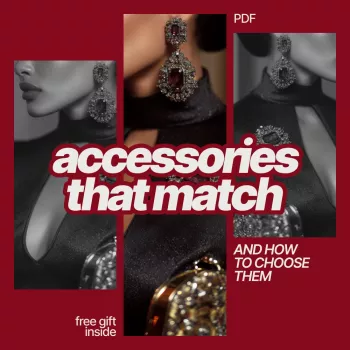
Accessories can either pull an outfit together or make it feel visually noisy. The easiest way to get consistent results is to choose pieces with a clear purpose—color harmony, proportion, and a repeatable “signature” that fits the occasion. Use the checklist below to narrow options quickly, avoid impulse mismatches, and build combinations that look intentional across seasons and dress codes.
Before you add earrings, belts, or a bag, pick what your outfit is “built around.” That anchor sets the formality, the vibe, and the styling lane—so your accessories can match on purpose.
| Outfit anchor | Accessories that usually match | Avoid when |
|---|---|---|
| Minimal monochrome look | One sculptural earring or bold cuff; structured bag; clean-toe shoes | Too many small “fussy” pieces that clutter the look |
| Busy print (florals, stripes, checks) | Solid-color accessories; simple metals; one repeated color from the print | Multiple competing prints or overly ornate jewelry |
| Denim-focused outfit | Leather belt; hoops; watch; casual crossbody; sneakers/boots | Ultra-formal evening jewelry that clashes with the casual base |
| Tailored suit or blazer | Polished watch; small hoops/studs; sleek loafers/heels; structured bag | Overly chunky costume jewelry that fights sharp lines |
| Soft knit set or flowy dress | Delicate layers; textured bag; tonal scarf; softer shapes | Very sharp, high-contrast hardware-heavy pieces (unless intentionally edgy) |
Metal is one of the fastest ways to make an outfit look “finished”—or accidentally mismatched. The goal isn’t strict rules; it’s a clear, repeatable plan.
If you’re stuck on color harmony, a quick refresher on how color systems work can help you decide whether to coordinate or contrast—see the Pantone Color Institute for approachable color guidance.
Accessories are part of the silhouette. When scale feels “off,” it usually means the accessory size is fighting the neckline, hair, or outfit volume.
Matching doesn’t mean identical. It means intentional repetition and a plan for contrast.
For broader context on how fashion evolves (and why “rules” keep changing), the overview at Encyclopaedia Britannica — Fashion is a useful reference.
Texture is the quiet detail that makes an outfit look styled rather than assembled. A simple echo—one repeated finish, one repeated fiber—goes a long way.
To keep favorite pieces looking their best, follow safe care basics like those outlined by GIA — Jewelry Care and Cleaning.
Use a “one hero piece” approach: choose one statement item and keep the rest simple. For everyday looks, 3–5 small pieces total (like earrings, a ring, a watch, a necklace, and/or a belt) often feels balanced.
Exact matching is optional; aim for coordination through tone, material, or hardware instead. Matching the formality and repeating one element (like a color family or metal) usually looks more modern than perfect sameness.
Yes—make it look deliberate by choosing one dominant metal, repeating both metals at least twice, and keeping shapes/styles consistent (for example, all minimal or all vintage-inspired).




Leave a comment